
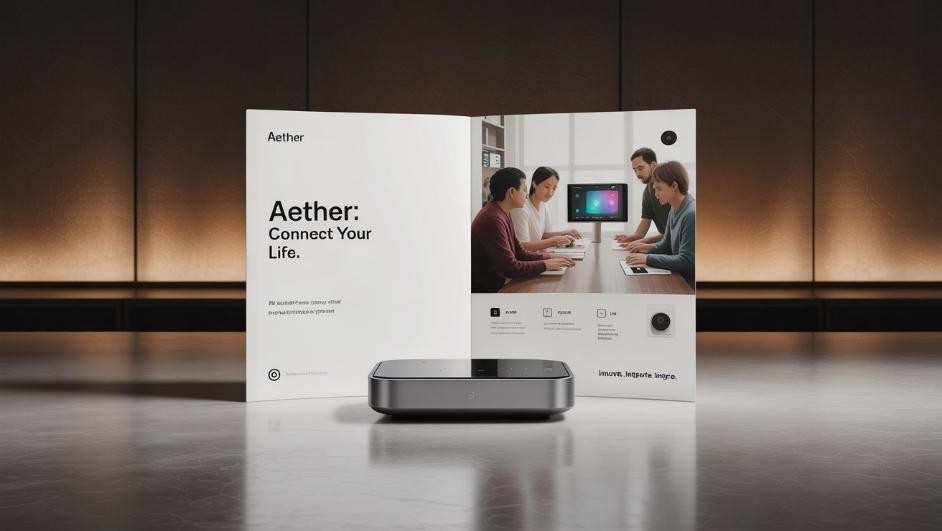
Using fake sales brochures as objectives in new product development means creating realistic, hypothetical marketing material for a product concept before the product is developed. This technique helps teams align on customer value, crystallize the target features, and clarify goals early in the process. I’ve used this in several cases, and it’s become one of my favorite tools, I’ve even used it for a lot of other things besides product development and it’s the best way to visualize an objective! This became more of a “how to” than a traditional blog post, but I truly believe this could be useful for anyone who wants to visualize their purpose and goals, so here we go.
Purpose of a Fake Sales Brochure
A fake sales brochure acts as a tangible representation of the ideal customer offer, becoming a proxy for the product's value proposition. It forces the team to define what will excite buyers, which features and benefits matter most, and how to position the product in the market. This enables sharper focus in development and helps to identify gaps or mismatches between market needs and technical plans early on.
Use in Lean and Agile Product Development
In Lean-Agile contexts, a fake brochure (sometimes called a "concept brochure" or "pretotype") is used as a lean experiment, a way to rapidly test desirability and potential messaging before investing in development. The exercise helps:
-
- Align cross-functional teams around customer-driven objectives.
- Enable fast iteration based on feedback about the concept, not just technical feasibility.
- Create clear, testable targets for the minimum viable product (MVP) and future releases.
Practical Steps
-
- Begin with defining the campaign objective: what problem does the product solve, and who is it for?
- Draft content for typical brochure sections—features, benefits, use cases, social proof, and calls to action.
- Refine the design and messaging through sketches and feedback sessions, making the "sales pitch" real enough to test internally or with customers.
- Use the fake brochure as a living objective; as development progresses and learning occurs, update the brochure to keep focus on customer value.
This practice is especially powerful in Lean Product and Process Development because it bridges the gap between technical design and market needs.

Initial Idea Evaluation
A team can use a sales brochure as a tool for gathering initial customer feedback by presenting the brochure to potential customers and observing their reactions to the proposed product concept. This allows teams to validate assumptions, identify desirable features, and refine the value proposition before significant investments are made in product development.
Steps for Using the Brochure for Feedback
-
- Share the brochure with target customers, either in interviews, surveys, or during informal meetups.
- Ask open-ended questions about their interest, perceived benefits, feature importance, and willingness to pay.
- Encourage constructive criticism and suggestions for improvement on messaging, design, and feature set.
Value for Lean Product Development
-
- Early exposure of the brochure helps detect misalignments between customer needs and the solution vision, leading to quick iterations.
- Visual representation of product concepts makes feedback tangible, enabling more accurate insights.
- Teams can prioritize features and messaging based on what excites or concerns customers and iterate quickly before committing development resources.
Key Practices
-
- Use the brochure as a stimulus in concept testing sessions, capturing specific behavioral feedback and improvement ideas.
- Document all feedback systematically to inform changes in both the product design and the marketing strategy.
By leveraging sales brochures in this way, product teams blend customer discovery, concept validation, and lean experimentation, driving higher chances of successful product launches.

Link to video.
Additional Resources
-
- Lean-Agile teams leverage fake brochures as visual, customer-focused targets for milestone reviews and iteration planning.
- Product vision boards are sometimes paired with brochures to capture assumptions about users and needs early.
By adopting this technique, product development teams can set clear, user-centric objectives, enhance cross-disciplinary alignment, and reduce waste in feature design and prioritization.
Organization News Page

Questions;
What experiences do you have with using fake sales brochures as targets for new product development before the product is developed?
Have you used visualization to simulate future services or products? What advantages and disadvantages have you experienced?
Join the conversation at our LinkedIn group!
Group Discussion Page

Bengt Johansson
Senior Lean Agile Coach at Lean-Peak Solutions
Bengt Johansson is a Lean-Agile Product Development expert and entrepreneur based in Eskilstuna, Sweden. After a life-long career at ASSA ABLOY, including leading the global Lean Innovation program and serving as Global Lean Innovation Manager, he now runs his own company, Lean-Peak Solutions AB, offering Lean–Agile product development services, evaluations, training, and development support to help organizations accelerate innovation and deliver customer value.

